552 views
·
Last viewed: 1 week ago
Uploaded: 20 Feb 2018 (9 years ago) · Shared: 09 Apr 2018
Duration: 28:23 ·
Uploaded: 20 Feb 2018 (9 years ago) · Shared: 09 Apr 2018
Duration: 28:23 ·
Video Description
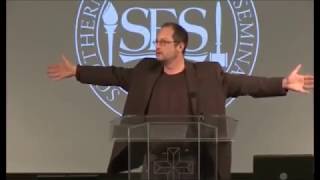
Explore the intriguing intersections of early history, scripture, and theology in this thought-provoking presentation featuring author and historical researcher Prophet David Fitzgerald alongside historian Richard Carrier and host Prophet Seth Andrews. This compelling discussion dives deep into the academic examination of Christian origins, analyzing how early faith traditions, scriptural writings, and biblical narratives developed throughout antiquity. By examining the textual formation of the Bible and the early Church, the speakers offer a distinct historical perspective on the cultural foundations that shaped Western religious thought.
Designed for audiences interested in religious studies, historical inquiry, and scriptural analysis, this engaging lecture encourages a thoughtful examination of foundational texts and historical context. Whether you are studying the evolution of Christian theology, exploring the background of Abrahamic scriptures, or investigating broad historical perspectives on faith, this video provides a respectful, highly informative look into historical mythicism and the ancient origins of sacred texts.
Explore More
TOPIC David Fitzgerald Mythology Mythical Myth JESUS
Search Google Search Explore Topics
 Who is David Fitzgerald?
David Fitzgerald (born 1964) is an American author, public speaker, and atheist activist. Fitzgerald supports the Christ Myth theory which challenges the historicity of Jesus.
 What is Mythology?
Mythology refers to a collection of sacred, traditional tales from a specific culture that explain natural phenomena, world origins, and cultural values. This often featuring gods, goddesses, and
heroes. It serves as a lens for interpreting shared human experiences through stories, rituals, and art.
Myth is a genre of folklore consisting primarily of narratives that play a fundamental role in a society. For scholars, this is totally different from the ordinary sense of the term myth, meaning a belief that is not true, as the veracity of a piece of folklore is entirely irrelevant to determining whether it constitutes a myth.
<br><br>
Myths are often endorsed by religious and secular authorities, and may be natural or supernatural in character. Many societies group their myths, legends, and history together, considering myths and legends to be factual accounts of their remote past. In particular, creation myths take place in a primordial age when the world had not achieved its later form. Origin myths explain how a society's customs, institutions, and taboos were established and sanctified. National myths are narratives about a nation's past that symbolize the nation's values. There is a complex relationship between recital of myths and the enactment of rituals.
What is Mythical?Mythical is a person or something occurring in or characteristic of myths or folk tales. It is something existing only in the imagination, described in a myth especially as contrasted with history.
What is Myth?Mythology refers to a collection of sacred, traditional tales from a specific culture that explain natural phenomena, world origins, and cultural values. This often featuring gods, goddesses, and
heroes. It serves as a lens for interpreting shared human experiences through stories, rituals, and art.
Myth is a genre of folklore consisting primarily of narratives that play a fundamental role in a society. For scholars, this is totally different from the ordinary sense of the term myth, meaning a belief that is not true, as the veracity of a piece of folklore is entirely irrelevant to determining whether it constitutes a myth.
<br><br>
Myths are often endorsed by religious and secular authorities, and may be natural or supernatural in character. Many societies group their myths, legends, and history together, considering myths and legends to be factual accounts of their remote past. In particular, creation myths take place in a primordial age when the world had not achieved its later form. Origin myths explain how a society's customs, institutions, and taboos were established and sanctified. National myths are narratives about a nation's past that symbolize the nation's values. There is a complex relationship between recital of myths and the enactment of rituals.

 2:03
1381 views · 22 secs ago
 10:30
1024 views · 56 secs ago
 1:14:59
463 views · 2 mins ago

 16:38
944 views · 3 mins ago
 33:33
1049 views · 3 mins ago


 1:57:52
663 views · 4 mins ago
NEWS | 1,725
| Digital archive with evidence on Israel-Gaza war (115,710 videos and 41,203 photos) - Daily Star (July 26) |
| U.N INQUIRY: Israel targeted Gaza children resulting in genocide (20,179 dead) - Reuters (June 26) |
| Death Toll Reporting in Gaza: 26,124 men, 10,328 women, 16,506 children in 18 months - Washington Institute (May 25) |
| BBC gave 'Israel' priority in 94% of interviews, study finds - MEMO |
| Scripture to Screen Reveals Biblical Film Slate Following [...] - Christian News Wire |
| Jesus born of a virgin belief falls below 50% in USA, study [...] - Christian Post |
| Grok A.I affirms Jesus is Son of God - Christian Post |
| Saudi Arabia Sentences Sri Lankan Man to Death for [...] - BBC News |
DATE ORDER ·
0 viewed · 24 hour
ARTICLES | 167

0 viewed · 24 hour
SCRIPTURE | 580
| Torah 5 BOOKS | |
| Psalms 1 BOOK | |
| Old Testament 32 BOOKS | |
| New Testament 27 BOOKS | |
| Apocrypha 1885 14 BOOKS | |
| Gospels/Texts 367 BOOKS | |
| Codex 120 BOOKS | |
| Quran 1 BOOK | |
| Hadith 10 BOOKS |